How Technology Is Improving Food Delivery Services
Technology is reshaping food delivery with faster, more reliable service and real-time order routing. Platforms now employ continuous ETA updates and optimized routing to cut dwell times. Real-time dashboards and GPS feeds offer end-to-end visibility, while event timestamps clarify delays and SLA adherence. AI drives route planning, demand forecasting, and kitchen automation, reducing outages. Personalization scales from custom menus to preference-driven routing and contactless experiences, creating a more seamless, data-backed operation that invites further examination.
How Technology Elevates Delivery Speed and Accuracy
Technology accelerates delivery times and improves accuracy through real-time order routing, optimized routing algorithms, and dynamic ETA updates. The system analyzes feed-forward data, calibrates dispatch decisions, and minimizes dwell times. Latency reduction emerges as a measurable outcome, while route resilience sustains service during disruptions. Operators observe consistent performance gains, enabling leaner fleets, predictable windows, and a more autonomous, freedom-friendly delivery landscape.
Real-Time Visibility: Tracking, Updates, and Transparency
Real-time visibility in food delivery centers on continuous tracking, timely updates, and transparent status communication across the end-to-end journey. Companies implement dashboards, GPS feeds, and event timestamps to quantify performance, identify delays, and validate SLAs. Real time tracking enables proactive interventions, while delivery transparency builds trust with customers, partners, and workers, supporting data-driven improvements without compromising autonomy or choice.
Smart Optimization: AI Routing, Demand Forecasting, and Kitchen Automation
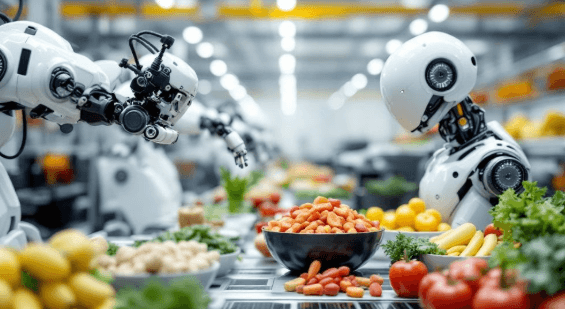
Smart Optimization employs AI-driven routing, demand forecasting, and kitchen automation to streamline delivery operations. It analyzes AI routing efficiency, route optimization, and order batching to minimize delays.
Demand forecasting informs inventory AI and autonomous kitchens, while predictive maintenance reduces outages.
The approach supports scalable operations, enhances reliability, and preserves rider freedom by reducing unnecessary constraints and optimizing resource allocation.
Personalization at Scale: Custom Menus, Preferences, and Contactless Experiences
Personalization at Scale builds on the efficiencies gained from smart optimization by applying individual-level customization to menus, preferences, and contactless experiences. The approach enables custom menus aligned with dietary needs, real time visibility into orders, and preference-driven routing. Data-driven experiments reveal higher satisfaction, repeat orders, and faster fulfillment, while preserving user autonomy and delivering scalable, frictionless dining experiences across diverse segments.
Frequently Asked Questions
How Do Delivery Apps Handle Data Privacy for Customers?
Delivery apps protect customer data through privacy safeguards and data encryption, ensuring stored and transmitted information remains confidential; they implement access controls, regular audits, and breach protocols, reflecting a curious, precise, data-driven approach for a freedom-seeking audience.
What Are the Hidden Costs Behind Tech-Driven Delivery Improvements?
Hidden costs emerge as delivery improvements unfold: increased platform fees, rider incentives, data infrastructure, and customer subsidies. The analysis notes measurable efficiency gains alongside raised unit economics, urging cautious expansion and transparent pricing to preserve user autonomy and market freedom.
Can AI Predict Demand Without Causing Worker Displacement?
AI demand forecasting can anticipate needs with reduced bias, yet potential workforce displacement remains a concern; effective Workforce displacement mitigation strategies are essential to balance operational efficiency with labor protections, informed by transparent data, gradual implementation, and ongoing impact assessment.
How Do Algorithms Address Bias in Restaurant Recommendations?
Algorithms address bias in restaurant recommendations by applying bias mitigation techniques and fairness metrics, reducing systematic favoritism. Some objections worry about opacity; nevertheless, transparent audits, interpretable models, and ongoing evaluation support trustworthy, data-driven personalization that respects user autonomy and choice.
What Cybersecurity Measures Protect Order and Payment Data?
Cybersecurity measures protect order and payment data through layered defenses, including encryption standards and regular cybersecurity audits. This data-driven approach quantifies risk, ensuring transparent protection while sustaining user autonomy and trust in digital food delivery ecosystems.
See also: qpoenergy
Conclusion
In the evolving landscape of food delivery, technology acts as a driver, steering speed and precision with data-backed confidence. Real-time tracking and AI-optimized routing shorten wait times, while demand forecasting and kitchen automation trim dwell points. Personalization scales from menus to preferences, enhancing loyalty through frictionless experiences. The result is a marketplace steadily sharpening its edges, like a well-tuned engine gliding along a highway of transparent metrics and trustworthy ETA updates.